

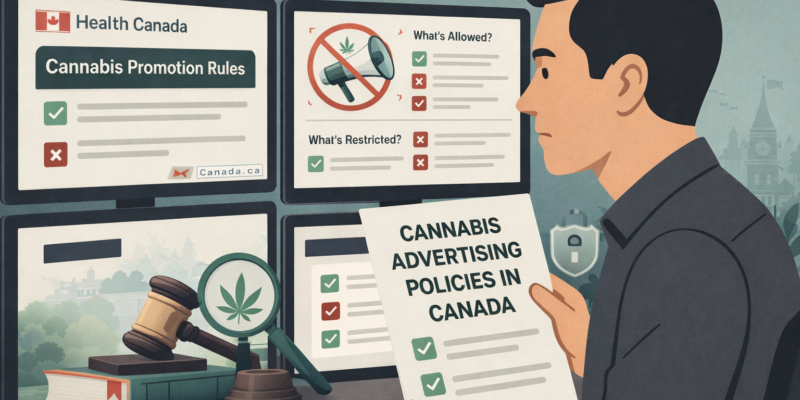
Cannabis Advertising Policy in Canada: What You Can & Can’t Do
The cannabis industry in Canada is one of the most regulated markets in the world — especially when it comes to advertising and promotion. While cannabis is legal, marketing it is heavily restricted under the Cannabis Act to protect public health and prevent exposure to youth.
For cannabis retailers, brands, and even accessory businesses, understanding the cannabis advertising policy in Canada is essential to stay compliant while still growing your business.
According to Health Canada’s official promotion guidelines, cannabis promotion is generally prohibited except in very limited and controlled circumstances.
Why Cannabis Advertising Is Strictly Regulated in Canada
The primary goal of cannabis advertising laws is to protect public health and safety — particularly to prevent cannabis promotion from appealing to young people or encouraging excessive use.
The Cannabis Act specifically aims to:
- Prevent youth exposure to cannabis marketing
- Reduce inducements and lifestyle-based promotion
- Ensure accurate and non-misleading information
- Promote responsible and informed consumption
As a result, Canada has adopted one of the strictest cannabis advertising frameworks globally. :contentReference[oaicite:0]{index=0}
—
What Is Considered “Promotion” Under Canadian Law?
Under the Cannabis Act, promotion includes any communication intended to influence consumer behavior or encourage the purchase of cannabis products or services. :contentReference[oaicite:1]{index=1}
This means advertising is not limited to traditional ads — it includes:
- Social media posts
- Website content
- Branding and visuals
- Email marketing
- Influencer collaborations
If the goal is to sell or influence perception, it likely falls under “promotion.”
—
What You CANNOT Do (Major Advertising Restrictions)
The Cannabis Act places strict prohibitions on how cannabis can be marketed. Businesses must avoid the following:
1. Appealing to Youth
Any marketing that could attract minors is strictly prohibited. This includes bright, playful designs, cartoon imagery, or anything that resembles candy branding. :contentReference[oaicite:2]{index=2}
2. Using Testimonials or Influencers
You cannot use endorsements, influencer marketing, or testimonials to promote cannabis products. :contentReference[oaicite:3]{index=3}
3. Lifestyle Advertising
Associating cannabis with a lifestyle (luxury, excitement, success, recreation) is not allowed. :contentReference[oaicite:4]{index=4}
4. Celebrity or Public Figure Associations
Any link between cannabis brands and celebrities is prohibited, as it may influence younger audiences. :contentReference[oaicite:5]{index=5}
5. False or Misleading Claims
You cannot promote cannabis with misleading claims about health benefits, potency, or effects. :contentReference[oaicite:6]{index=6}
6. Sponsorship & Event Promotion
Cannabis brands cannot promote themselves through sponsorships, events, or public partnerships. :contentReference[oaicite:7]{index=7}
—
What You CAN Do (Legal Marketing Opportunities)
Despite strict rules, there are still ways cannabis businesses can legally market their products.
1. Informational Advertising
You can provide factual, non-promotional information such as:
- Product availability
- Pricing (in limited contexts)
- Product characteristics
2. Age-Gated Marketing
Promotion is allowed in spaces where youth cannot access the content, such as:
- Age-restricted websites
- Email marketing to verified users
- In-store displays
3. Brand Preference Promotion (Limited)
Businesses can promote brand elements — but only under strict conditions that do not appeal to youth or lifestyle imagery. :contentReference[oaicite:8]{index=8}
4. Educational Content (BEST STRATEGY)
Educational blogs, guides, and informational content are one of the safest and most effective marketing strategies in the cannabis industry.
This is why content like:
- “Cannabis Edibles Guide”
- “CBD vs THC Explained”
- “How to Choose Cannabis Products”
…performs well while staying compliant.
—
How Cannabis Businesses in Ontario Are Adapting
Because traditional advertising channels are limited, cannabis retailers in Ontario are shifting toward:
- SEO-driven blog content
- Local search optimization (“cannabis near me”)
- Email marketing with age verification
- Website optimization and educational resources
- In-store experience and customer education
At HAVOK SMOKE, we focus on providing clear, informative content and a curated product experience for customers in North York, Aurora, Richmond Hill, and Newmarket — all while staying compliant with Canadian regulations.
—
Why SEO Is the #1 Strategy in Cannabis Marketing
Due to advertising restrictions, SEO has become the most powerful growth channel in the cannabis industry.
Instead of paid ads, businesses rely on:
- High-quality blog content
- Keyword targeting (e.g., cannabis delivery Ontario)
- Local SEO (Google Maps, location pages)
- Educational resources that build trust
This approach not only complies with the law but also builds long-term organic traffic and authority.
—
Final Thoughts
The cannabis advertising policy in Canada is designed to protect consumers while allowing limited, responsible promotion. While these restrictions may seem limiting, they have also created opportunities for businesses to innovate through education, SEO, and customer experience.
Understanding and following these rules is essential for any cannabis retailer or accessory business operating in Ontario.
At HAVOK SMOKE, we embrace compliant marketing by focusing on transparency, education, and providing high-quality cannabis and smoking accessories to our local communities.
Frequently Asked Questions About Cannabis Advertising in Canada
Is cannabis advertising allowed in Canada?
Cannabis advertising in Canada is heavily restricted under the Cannabis Act. While some forms of promotion are allowed, most traditional advertising methods are prohibited, especially those that appeal to youth or promote a lifestyle associated with cannabis.
What is prohibited in cannabis advertising in Canada?
Cannabis advertising cannot include endorsements, testimonials, lifestyle imagery, or anything that could appeal to young people. It is also illegal to use celebrities, influencers, or misleading claims to promote cannabis products.
Can cannabis businesses run ads on social media in Canada?
Most social media advertising for cannabis is restricted unless it is strictly informational and age-gated. Platforms like Meta and Google also have their own policies that further limit cannabis-related advertising.
What type of cannabis marketing is allowed in Canada?
Informational and educational marketing is allowed, including product details, availability, and factual content. Promotion is also permitted in age-restricted environments such as verified websites or direct email communication.
Why is cannabis advertising so restricted in Canada?
The restrictions are designed to protect public health, prevent youth exposure, and ensure cannabis is marketed responsibly without encouraging excessive or risky use.
Is influencer marketing allowed for cannabis in Canada?
No, influencer marketing and testimonials are prohibited under Canadian cannabis advertising laws because they can influence consumer behavior, particularly among younger audiences.
Can cannabis brands sponsor events in Canada?
No, cannabis companies are not allowed to promote themselves through sponsorships, events, or public endorsements under the Cannabis Act.
What is the best marketing strategy for cannabis businesses in Canada?
Search engine optimization (SEO), educational content, and local search strategies are the most effective and compliant ways to market cannabis businesses in Canada.
Can cannabis stores advertise prices or promotions?
Price information can be shared in limited, factual ways, but promotional tactics that encourage excessive consumption or appeal to emotions are not allowed.
Where can I read the official cannabis advertising rules in Canada?
You can review the official guidelines on the Health Canada website: Cannabis Promotion Prohibitions.